Contact
 Find an agency
 Customer portal


- Advice

- Life events
- Insurance
- Services
- Report a claim
-

-

-
 Close
Close






The Human Safety Net
“We’re all starting from scratch here”
How Viktoriia from Ukraine found a job in Switzerland.
When war broke out in Ukraine, Viktoriia fled to Switzerland with her children. But finding a job proved difficult. Capacity, whose programme helps refugees integrate into the labour market, came to her aid.
Viktoriia, what happened to you when the war broke out in Ukraine?
We were living in Kyiv. As soon as the war began, we left the city to stay with relatives in the countryside, on Ukraine’s western border. After two weeks of waiting, we realised that the situation was not improving. That’s why my husband and I decided that I had to take the children abroad. Like all men under 60, he had to stay in the country. Three and a half years ago, I had no idea that we would be leaving our homeland indefinitely and that I would not see my husband for such a long time. But in the end, only one thing mattered: I can hold everything I need in life in my two hands – my children.
Why did you end up in Switzerland of all places?
Picking Switzerland was a conscious decision, as it is far enough away from Ukraine and independent of the EU. We lived in a hotel for the first few days, but then I happened to meet a woman who helped me find an apartment. I was always told that people in Switzerland were closed-off – but the opposite was true! They’re helpful and open-minded.
It was important to me to quickly put together a daily routine for the children so that they could go to school and resume their sporting hobbies. And then I wanted to find a job as soon as possible so that I wouldn’t be dependent on welfare payments.
How did your job search go?
I had no idea what the rules were in Switzerland when applying for a job; these vary greatly from country to country. So, I simply looked for ads and sent out my CV – but I didn’t have a cover letter, something I knew nothing about. That’s why I usually didn’t even get a response. Then I heard about Capacity and its Access Fast Track programme that helps people like me integrate into the labour market so that we can overcome linguistic and cultural barriers. And a great deal has changed since then.
How, specifically, did you benefit from Capacity’s offerings?
Capacity provided me with a coach, Nicole Duarte from Generali Switzerland. She really helped me to understand the Swiss labour market. First, we adapted my CV, then I learnt how to write a cover letter. True, I still got rejections, but that was a step forward for me in and of itself!
I also learnt that there are platforms like LinkedIn, and that you can find a job with Vitamin B, too. I’ve been working as a team assistant at the Jugendnetzwerk foundation in Zurich and Horgen, which assists families and young people in difficult and stressful situations, for a year and a half now. It’s a job I really enjoy.
Our foundation, “The Human Safety Net Switzerland”, supports Capacity. How important is having a safety net of people to you in a foreign country?
For me, this integration programme offered much more than just help with finding a job. During the workshops, I was also able to make friends with people who had experienced similar situations to me and are facing the same issues here. We were all in the same boat: we had all enjoyed a good education in our home countries and many of us had held positions of responsibility. But no matter what we had at home, we’re all starting from scratch here.
Where do you see the future for you and your children?
The reason why I need to live abroad is truly awful. Nevertheless, I’m glad to be here right now. I’ve come to feel at home here and have found good friends who support me. My German is getting better and better, while the children already speak the language perfectly and are well integrated here. They have a safe life in Switzerland and are receiving a good education.
I see our future here – provided we can stay. I don’t know what’s going to happen with our family. I haven’t seen my husband in two years. I have to rely entirely on myself and shoulder all the responsibility alone – day after day. Even the children have become accustomed to living without their father, which makes me very sad. I miss my own family very much. I couldn’t say goodbye to my father when he died two years ago. But in Kyiv, people still live in fear. You never know when and where the next rocket or armed drone is going to hit. The only thing missing from our happiness is peace.
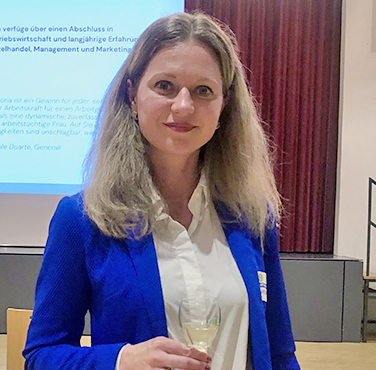
Viktoriia
A Ukrainian woman in Switzerland